Common Mistakes to Avoid During Oil Changes in Heavy Duty Diesel Trucks
-
Use diesel engine oil with the manufacturer-specified viscosity and API or ACEA rating, and avoid repeatedly mixing brands or conventional and synthetic formulations.
Follow the truck manufacturer’s oil-change interval, replace the oil filter every time, inspect the air filter, and check oil levels weekly between services.
Before and after an oil change, inspect for leaks, damaged hoses, loose connections, contamination, incorrect fill levels, and warning signs such as metal particles or milky oil.
Professional diesel maintenance provides correct filters, torque specifications, fluid levels, service documentation, and used-oil disposal while reducing the risk of expensive engine damage.
When you're running a fleet of heavy duty diesel trucks, oil changes aren't just routine maintenance—they're critical to keeping your engines healthy, your rigs on the road, and your bottom line solid. We've seen countless operators make preventable mistakes during oil changes that end up costing them thousands in repairs, downtime, and lost revenue. The good news? Most of these errors are easy to avoid once you know what to watch for.
Whether you're managing your own equipment or relying on a trusted partner, understanding the common pitfalls in diesel truck oil changes can save your operation serious headaches. Let's walk through what we've learned from years of working with drivers and fleet managers across the region, and why getting this maintenance right matters more than you might think.
Getting the Basics Right: Why Diesel Oil Changes Demand Precision
Heavy duty diesel engines aren't forgiving when it comes to oil quality and service intervals. Unlike passenger vehicles, commercial diesel engines work harder, run hotter, and accumulate contaminants faster. That's why we can't stress enough: treating your oil changes as a quick checkbox is one of the fastest ways to shorten engine life.
We work with operators who understand that proper oil changes are preventive medicine for their engines. When you partner with Doug Andrus Distributing, we handle the technical know-how so you can focus on what you do best—moving freight.
Mistake #1: Using the Wrong Oil Grade or Type
This is hands down the most common error we see. Diesel engines have specific oil requirements, and using the wrong grade or type isn't a minor oops—it's a recipe for accelerated wear, higher viscosity breakdown, and potential engine damage.
Heavy duty diesel trucks require oils designed specifically for diesel engines, including ACEA or API rated oils that meet your engine manufacturer's specifications, low-ash formulations that protect against deposit buildup, and products with extended drain intervals that match your truck's capability.
We've worked with operators who grab whatever oil's on sale or cheapest, only to discover their engine suffered damage that could've been prevented with the right product. Your truck's maintenance manual isn't a suggestion—it's the blueprint for keeping your engine running strong. Using synthetic blends or fully synthetic oils designed for diesel can actually extend your drain intervals, saving you money over time.
Mistake #2: Ignoring Drain Intervals or Extending Them Too Far
We get it—you're busy, schedules are tight, and squeezing out a few extra miles between services sounds tempting. But skipping or extending oil changes beyond what your engine builder recommends is one of the fastest ways to invite catastrophic failure.
Modern diesel engines with extended drain intervals can sometimes go 25,000 to 35,000 miles or more between changes, depending on the oil, engine, and conditions. That's great—but only if you're using the right oil and monitoring your engine's condition. Running beyond the recommended interval without proper filtration and monitoring leaves your engine vulnerable to sludge and varnish buildup, worn piston rings and bearing surfaces, reduced compression and power, and potential engine seizure.
We've seen operators try to stretch intervals to save a few dollars, only to spend tens of thousands on a complete engine overhaul. The math doesn't work in your favor.
Mistake #3: Neglecting the Oil Filter and Air Filter
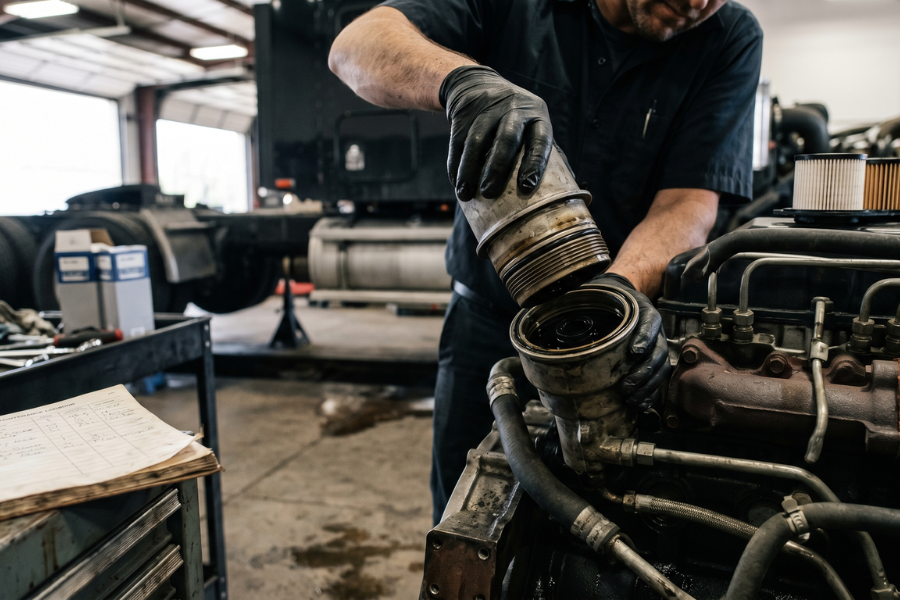
Your oil filter does more than just trap particles—it's working overtime in a heavy duty diesel engine, dealing with soot, fuel dilution, and water contamination. Replacing your oil is only half the job.
We strongly recommend replacing the oil filter every oil change without exception, using OEM or high-quality filters designed for your specific engine, checking bypass valve conditions in older trucks where filter restrictions can trigger bypass, and inspecting air filters simultaneously since a clogged air filter forces your engine to work harder and generate more soot in the oil.
We've had customers come to us with oil contamination issues that traced back to a neglected air filter. The extra cost of a quality filter is nothing compared to the repair bills when contaminants get into your crankcase.
Mistake #4: Mixing Oil Types or Brands Inconsistently
Your diesel engine isn't indifferent about which oil you use. While you can switch between compatible brands or types, constantly mixing different formulations—conventional, synthetic blend, full synthetic—creates unpredictable results.
Additive packages vary between brands and types, and they don't always play well together. Viscosity stability changes when you blend different oils. Drain interval recommendations shift based on the specific product. Engine deposits build differently depending on what you're running.
We recommend picking an oil that meets your engine's requirements and sticking with it. Talk with our fleet specialists if you're uncertain which product is best for your specific rig.
Mistake #5: Overlooking the Importance of Proper Disposal
Old diesel oil isn't trash—it's a hazardous material that needs responsible handling. Dumping it down a drain, into a landfill, or leaving it sitting in drums creates environmental liability and potential legal consequences.
Proper oil disposal means collecting used oil in sealed, labeled containers, keeping it separate from other fluids like coolant or fuel, working with licensed disposal services that handle hazardous materials correctly, and maintaining disposal records for your fleet's documentation.
Many municipalities offer free or low-cost oil disposal programs. It's the right thing to do for the environment, and it protects your operation from liability.
Mistake #6: Skipping Pre-Change Inspections
Before you drain that oil, you should be inspecting your engine for signs of trouble. We've found problems early—leaking gaskets, loose fittings, worn hoses—simply by paying attention during routine maintenance.
A quick pre-change walkthrough should include checking for visible leaks around the pan, filter, and seals, inspecting hose clamps and connections for corrosion or looseness, looking at the condition of surrounding components that share cooling or lubrication systems, and monitoring for any unusual odors or discoloration that might signal problems.
These five-minute checks can catch issues before they become expensive repairs. It's why we always recommend having a trained technician handle your diesel truck oil changes—they know what to look for.
Mistake #7: Forgetting to Top Off or Check Levels Afterward
After your oil change, your oil level needs to be correct. Too low, and you're starving critical engine components. Too high, and you risk seal damage and oil migration into the combustion chamber.
Allow the engine to settle for a few minutes after adding new oil, check levels on a level surface with the engine off, top off gradually rather than filling to the absolute maximum, and recheck after the next 50 miles of driving to ensure levels remain stable.
We've had operators overfill their engines thinking "more oil is better," only to damage seals and trigger sensor errors. Stick to the manufacturer's specifications.
Mistake #8: DIY Service Without Proper Equipment or Knowledge
This might be the most important point: not all oil changes are created equal, and diesel engines require precision that most DIY operators aren't equipped to handle.
Professional service ensures correct torque specifications on drain plugs and filter housings, proper disposal of used oil and filters, accurate fluid levels and fill procedures, inspections for underlying problems that catch issues early, and documentation for warranty and resale purposes.
We understand the temptation to save money by doing it yourself, but one mistake—a cross-threaded drain plug, incorrect filter installation, or overfilled crankcase—can cost you far more than you'd save.
Keep Your Diesel Running Strong
Getting oil changes right is foundational to fleet health. The mistakes we've covered here aren't academic—they're real issues we've helped operators overcome. By avoiding these pitfalls, you're protecting your biggest assets and maintaining the reliability that keeps your business moving.
If you're managing your own trucks or looking for a reliable partner who understands heavy duty diesel maintenance, we're here to help. We've built our reputation on genuine expertise and a commitment to keeping trucks running. Whether you need advice on maintenance practices, want to discuss truck driving jobs in Idaho Falls, or are interested in exploring carrier partnerships, let's talk. Contact us today to discuss how we can support your operation.
Related Questions
What's the difference between diesel and gasoline engine oil?
Diesel oils contain higher additive concentrations to handle the heavier demands of compression ignition engines—more soot, higher heat, and greater stress on bearings. They're formulated differently and shouldn't be substituted for gasoline oils or vice versa.
How often should we check our oil between changes?
Weekly checks are ideal for heavy duty trucks. Quick visual inspections catch leaks, seal failures, or contamination issues before they become major problems. Most operators check during their pre-trip inspection routine.
Can we recycle or resell our used diesel oil?
Yes, used diesel oil is valuable and fully recyclable. Licensed recycling centers accept it, and some waste oil processors even pay for large quantities. Always work with certified facilities to ensure proper handling and compliance.
What warning signs indicate our engine needs professional service beyond routine oil changes?
Metal shavings in the oil, dark or milky discoloration, burning oil smell, low pressure warnings, or metal-on-metal grinding sounds all warrant immediate professional inspection. Don't ignore these signals—they prevent small problems from becoming catastrophic.