How to Handle Emergency Repairs on Commercial Trailers
-
When a commercial trailer breaks down, move safely away from traffic, activate hazard lights, document the symptoms and damage, and contact a qualified repair provider.
Brake failure, nonworking lights, tire separation, bent axles, and severe suspension damage require immediate professional attention before the trailer returns to the road.
Preventive trailer maintenance—including regular brake, tire, fluid, suspension, and electrical inspections—helps reduce roadside emergencies, towing costs, delivery delays, and unplanned downtime.
Drivers and fleet operators should maintain an emergency kit, understand their roadside-assistance coverage, and establish a reliable commercial trailer repair network before a breakdown occurs.
When you're out on the road, a breakdown isn't just an inconvenience—it's a financial hit. Whether you're hauling freight across Idaho or making time-sensitive deliveries, an unexpected trailer issue can cost you hours of lost productivity, customer dissatisfaction, and repair bills that hurt your bottom line. The difference between handling an emergency repair poorly and managing it like a pro often comes down to preparation, quick thinking, and knowing when to call the experts.
We've worked with countless drivers and fleet operators here in Idaho Falls who've faced these situations. Some handled them smoothly. Others learned hard lessons the expensive way. This guide will walk you through what you need to know about emergency trailer repairs—so when something goes wrong, you're ready.
Understanding Common Trailer Emergencies and When They Strike
Trailer problems rarely announce themselves politely. A hydraulic leak, a brake system failure, tire blowouts, or electrical issues can happen anywhere—sometimes miles from the nearest service facility. The key to handling these situations effectively is recognizing what you're dealing with and understanding which problems demand immediate professional attention.
Brake issues are some of the most serious emergencies you'll face. If your trailer's brakes aren't responding properly, that's not something you troubleshoot on the shoulder of I-15. A faulty brake system puts you, your cargo, and other motorists in genuine danger. Similarly, if your lights go out completely or your electrical system fails, you're looking at a safety hazard and a legal violation. Tire separations, bent axles, and severe suspension damage also fall into the "stop and call a professional" category.
On the other hand, some issues might feel urgent but can be managed temporarily if you know what you're doing. A loose mud flap won't leave you stranded, though it should be fixed at your next maintenance stop. A minor air leak in your tires might allow you to limp to the nearest service center rather than requiring a roadside intervention.
The problem is distinguishing between the two, especially under pressure. That's where experience and professional guidance become invaluable.
Immediate Steps to Take When You're Stranded
Your first priority is safety—yours and everyone sharing the road with you. If you experience a serious trailer issue while driving, pull over to a safe location away from traffic. Turn on your hazard lights, and if you're on a major highway, try to position your rig so you're as far from active lanes as possible.
Next, document what you're experiencing. Take photos or videos of the damage if it's visible. Note any sounds, smells, or warning signs you noticed before the breakdown. This information becomes crucial when you're explaining the problem to a service technician. "My brakes feel soft" and "my brakes are completely unresponsive with a burning smell" tell two very different stories.
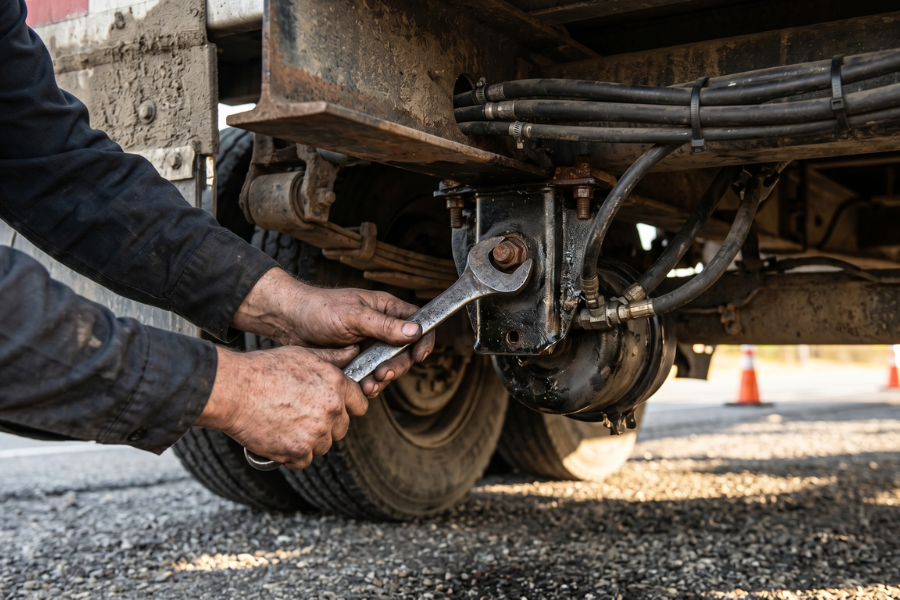
Once you've secured the scene, contact a professional immediately. This is not the time to tinker or experiment. A skilled technician can diagnose the issue quickly and recommend the right course of action—whether that's a roadside repair or towing to a full-service facility.
Why DIY Repairs Usually Cost More
We understand the temptation. You've got some mechanical knowledge, basic tools, and time ticking away. How hard can it be to swap a tire, tighten a connection, or replace a fuse?
Here's the reality: commercial trailers are complex systems. What looks like a simple issue on the surface often connects to larger mechanical problems. A brake warning light might seem like a sensor glitch until a technician discovers it's actually signaling wear that's reached critical levels. Attempting repairs without proper diagnostic equipment can mask the real problem, leaving you vulnerable to a more serious failure down the road.
There's also the liability question. If you perform unauthorized maintenance and something goes wrong later, that's on you. Insurance companies won't cover failures traced back to amateur repairs. Fleet operators who maintain their own trailers sometimes discover too late that a DIY fix created a cascading problem—and now they're looking at repairs that cost three times what professional service would have cost initially.
Professional technicians have specialized diagnostic tools, OEM parts access, and warranty backing. When we handle your repairs, you get peace of mind. When you DIY, you're hoping for the best and preparing for something to go catastrophically wrong.
Working with Professional Repair Services
When you reach out for help, having a relationship with a reliable service provider makes all the difference. Doug Andrus Distributing understands commercial trailer operations because we're part of the industry. We know what pressures you're under, and we know how to minimize downtime.
A quality repair partner will do more than just fix what's broken. They'll conduct a thorough inspection to identify potential problems before they become emergencies. They'll keep you informed throughout the repair process so you understand what's being done and why. And they'll stand behind their work with proper warranties.
When you're calling for emergency service, be specific about your location, the symptoms you're experiencing, and how long you can wait. This helps the dispatcher get you the right technician with the right parts and expertise. If you're dealing with equipment for sale or fleet management, having a service partner who can also supply quality equipment is incredibly valuable.
Preventive Maintenance: Your Best Emergency Prevention Strategy
Here's what we've learned working with successful operators: emergency repairs become rare when you commit to preventive maintenance. This isn't just about following a checklist—it's about protecting your investment and your revenue.
A solid maintenance schedule catches problems before they become roadside disasters. Regular brake inspections identify wear before systems fail. Tire rotations and inspections prevent blowouts. Fluid checks reveal leaks before they cause damage. Electrical system testing catches corroded connections before lights go out.
The cost of preventive maintenance is negligible compared to emergency repairs, towing fees, and lost delivery time. A technician spending an hour doing a planned inspection is infinitely cheaper than a technician spending four hours on an emergency call in the middle of nowhere.
Different trailers and operational styles require different maintenance approaches. A refrigerated trailer hauling perishables faces different stresses than a flatbed. A trailer running short routes locally experiences different wear patterns than one crossing several states. Working with our fleet of experienced professionals means getting maintenance recommendations tailored to your actual operations.
Building a Reliable Support Network
One of the most overlooked strategies for handling emergencies is having a network in place before you need it. Know who you'll call. Have their contact information saved in your phone, your dispatch system, and your paperwork. Know their hours, their capabilities, and their service area. If you're part of a carrier partnerships arrangement, clarify what support is included and what you'll need to arrange yourself.
For fleet operators, this means establishing relationships with service providers in key regions along your regular routes. For owner-operators, it might mean joining a network that provides access to emergency services across multiple locations.
Communication is critical. When something goes wrong, the ability to explain the problem clearly and get accurate guidance can mean the difference between a minor repair and a major headache. Professional service providers who know you and your equipment can often diagnose issues over the phone and guide you through temporary solutions if necessary.
When Replacement Makes More Sense Than Repair
Sometimes an emergency repair leads to a bigger realization: the trailer is aging out, repeatedly failing, or simply not reliable enough for your operation anymore. This is actually useful information. If you're facing a major repair on an older trailer, it might be worth exploring the equipment for sale options that could serve you better long-term.
Newer trailers come with reliability advantages, lower maintenance costs, and often better fuel efficiency. They're designed with modern safety standards and produce fewer unexpected failures. For many operators, the switch from maintaining an aging trailer to operating a newer, more reliable unit actually improves profitability once you factor in all costs.
Keeping Your Operation Running Smoothly
Emergency trailer repairs are never convenient, but they don't have to derail your entire operation. By understanding common issues, maintaining your equipment, and building relationships with professionals who understand commercial transportation, you can minimize disruptions and keep your business moving forward.
The drivers and fleet operators who experience the fewest emergencies aren't the lucky ones—they're the prepared ones. They maintain their equipment regularly. They know their service partners. They don't try to DIY repairs that require expertise. And they've built redundancy into their operations so that when something does go wrong, it doesn't become a catastrophe.
If you're looking to strengthen your maintenance and repair strategy, or if you need professional support for your trailer fleet, we're here to help. Contact our team at Doug Andrus Distributing to discuss your specific needs. Whether you're managing a small owner-operator rig or coordinating a large fleet, we'll work with you to develop a maintenance approach that keeps you on the road and your business profitable.
Related Questions
What should I keep in my emergency repair kit?
Essential items include basic tools, spare fuses, jumper cables, flashlights with extra batteries, hazard triangles or flares, a tire pressure gauge, rope or straps, and your service provider's contact information. Remember that many emergency situations require professional equipment—your kit should help you stay safe while you wait for help.
How long does a typical trailer repair take?
It depends entirely on the issue. A tire replacement might take an hour. A brake system diagnosis and repair could take several hours. Major structural or electrical work might require your trailer to stay in the shop overnight. Professional technicians can usually give you a time estimate once they've diagnosed the specific problem.
Can I legally drive a trailer with damaged lights?
No. Operating a trailer with non-functional lights violates federal transportation regulations and exposes you to citations and fines. Non-functional brake lights are a serious safety hazard and a legal violation. Electrical issues must be repaired before the trailer is back on the road.
Does my commercial insurance cover emergency roadside repairs?
Coverage varies significantly by policy. Some commercial policies include roadside assistance; others require you to arrange and pay for services separately. Review your policy or contact your insurance agent to understand exactly what's covered so there are no surprises if you need emergency service.