The Impact of Tire Pressure on Commercial Truck Performance
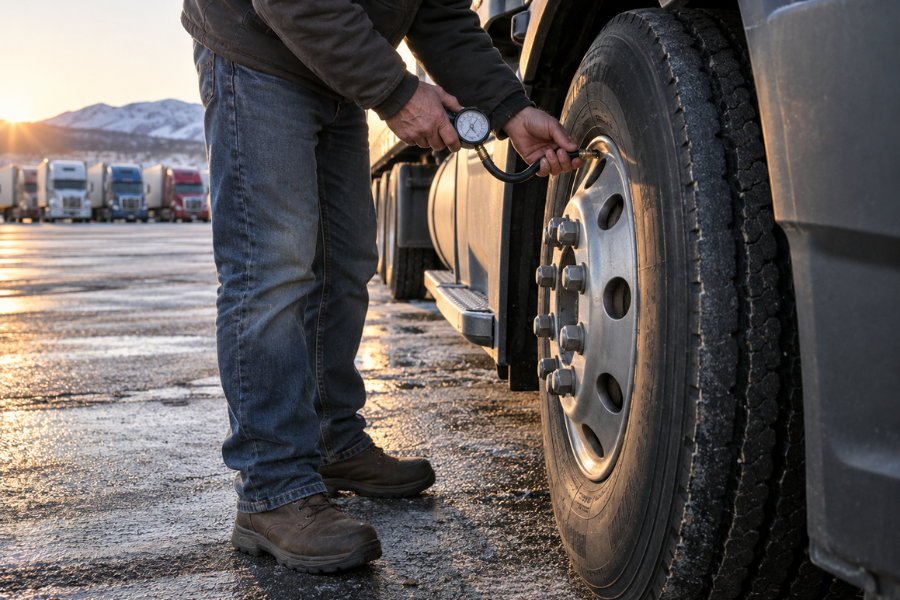
Commercial truck tires do a lot more than keep a rig rolling. They support heavy loads, provide traction, absorb road impacts, and help drivers maintain control through thousands of miles of changing road and weather conditions.
The amount of air inside those tires plays a major role in how well they perform. Incorrect tire pressure can affect handling, fuel efficiency, tire wear, braking, and overall fleet reliability. For professional truck drivers, those effects can add up quickly.
At Doug Andrus Distributing, we know dependable equipment makes a difference on every route. Our drivers operate well-maintained trucks backed by professional maintenance and support, helping them stay focused on the road instead of worrying about preventable equipment problems.
Drivers can learn more about the equipment supporting our operation through our fleet or explore available truck driving jobs in Idaho Falls and beyond.
Why Commercial Truck Tire Pressure Matters
Tire pressure affects how much of a tire contacts the road and how the tire handles the weight placed on it. When inflation is outside the appropriate range for the tire and application, performance can change significantly.
An underinflated tire can flex more than intended as it rolls. An overinflated tire can create its own problems by changing the tire's contact with the road and concentrating wear differently.
Either condition can interfere with the consistent performance drivers expect from commercial equipment.
For fleets, proper tire inflation is part of a much larger maintenance strategy. Tires need to work together with the truck's suspension, brakes, alignment, and other systems to provide predictable performance mile after mile.
Tire Pressure Affects Commercial Truck Handling
Drivers develop a feel for how their equipment responds. Steering, cornering, braking, and stability become familiar over time, which makes consistency especially important.
Improperly inflated tires can change that response.
A tire that isn't performing as intended may affect how the truck handles turns, lane changes, uneven pavement, and sudden changes in traffic. Those differences can become more noticeable when the vehicle is carrying a heavy load or traveling through challenging conditions.
Southeast Idaho drivers also face everything from summer heat to snow, ice, wind, and rapidly changing temperatures. Reliable tire performance becomes even more important when road conditions are less forgiving.
Our goal is to support drivers with well-maintained equipment that behaves predictably. Professional tire service and fleet maintenance help create that consistency.
Underinflated Tires Can Generate Excess Heat
Commercial tires experience constant flexing as they rotate under the weight of the truck and its cargo. When a tire is underinflated, that flexing can increase.
More flex means more heat.
Excess heat can place additional stress on tire components and contribute to premature deterioration. On long highway routes, where tires may spend hours continuously rolling at speed, that heat buildup becomes especially important.
The problem isn't always immediately obvious from behind the wheel. A tire may continue operating while conditions inside it are becoming increasingly demanding.
That is one reason professional tire inspection and maintenance matter before a small pressure issue develops into a larger problem.
For drivers, reliable maintenance support means fewer unexpected interruptions and more confidence in the equipment assigned to the route.
Proper Tire Pressure Helps Extend Tire Life
Commercial truck tires represent a significant investment for any fleet, and uneven or accelerated wear can shorten their useful life.
Inflation pressure affects how the tire's tread contacts the pavement. If that contact pattern changes, certain areas of the tread may wear faster than others.
The result can be a tire that requires replacement even though other portions of the tread still appear usable.
Proper inflation, alignment, rotation practices, and professional inspection all work together to support more consistent tire wear and longer service life.
Extending tire life is not simply about reducing equipment costs. It also helps reduce the number of unplanned tire changes that can interfere with schedules.
A fleet with dependable tires spends more time moving freight and less time waiting for service.
Tire Pressure Can Influence Fuel Efficiency
A commercial truck has to overcome rolling resistance every time it moves. Tire condition and inflation can influence how much energy is required to keep that vehicle rolling.
Underinflated tires generally create more resistance because the tire deforms more as it contacts the roadway. The engine then has to work harder to maintain speed.
That difference may seem small on a single trip, but trucking fleets operate across enormous numbers of miles.
Small efficiency losses multiplied across thousands of miles can become meaningful fuel costs.
Maintaining equipment properly helps fleets get more consistent performance from the trucks they already operate. Tire management is one piece of that larger effort.
At Doug Andrus Distributing, dependable equipment is part of how we support our professional drivers. Our driver benefits also include resources designed to support drivers and their families both on and off the road.
Tire Pressure Plays a Role in Braking Performance
Commercial vehicles need predictable traction when slowing or stopping. Tires provide the connection between the truck and the roadway, making their condition an essential part of braking performance.
Incorrect inflation can change the shape of the tire's contact patch. That may influence traction and how evenly forces are distributed across the tire.
Brakes, tires, suspension, vehicle weight, road conditions, and driver inputs all work together during a stop. No single system operates independently.
That is why comprehensive fleet maintenance matters.
A professional maintenance program doesn't treat tires as isolated components. Tire condition is evaluated as part of the truck's overall safety and performance.
When equipment systems work together as intended, drivers have a more dependable platform for responding to changing traffic and road conditions.
Tire Pressure Changes With Temperature
Idaho weather can change dramatically throughout the year, and temperature influences tire pressure.
As temperatures rise or fall, the air inside a tire changes as well. That means inflation conditions that were appropriate during one period may not remain exactly the same as outdoor temperatures change.
Seasonal transitions can be especially important for fleets operating throughout Idaho and the Mountain West.
Cold mornings, warmer afternoons, elevation changes, and long routes can expose tires to a wide range of operating conditions.
This makes consistent professional tire monitoring more valuable than relying on a single inspection performed weeks or months earlier.
A well-managed fleet accounts for changing conditions throughout the year instead of treating tire maintenance as a one-time task.
Load Weight Makes Correct Inflation Even More Important
Commercial trucks may carry dramatically different loads from one route to another. Tire performance depends not only on pressure but also on the weight the tire is being asked to support.
Heavy freight places significant demands on tires, wheels, suspension components, and braking systems.
Commercial fleets therefore need tire specifications and maintenance practices that match the equipment, axle configuration, tire type, and intended application.
This is not an area for guesswork.
Professional fleet maintenance helps ensure tires are managed according to the requirements of the truck and the work it performs.
That matters across a diverse transportation operation. Doug Andrus Distributing operates equipment for refrigerated freight, flatbed loads, hoppers, vans, step decks, and other applications, each with its own operational demands.
Uneven Tire Pressure Can Affect Fleet Reliability
A truck doesn't rely on one tire. Tractor-trailers use multiple tires across several axles, and differences between them can create additional wear and performance issues.
When tires sharing an axle or position aren't operating consistently, one tire may carry more of the workload than intended.
Over time, that can contribute to uneven wear, unnecessary stress, and earlier replacement.
Fleet-wide tire management helps prevent maintenance from becoming purely reactive. Rather than waiting for a tire failure to interrupt a route, professional maintenance teams can identify developing concerns during scheduled service.
Preventive maintenance turns tire care into a planned fleet expense instead of an unexpected roadside event.
That predictability benefits drivers, dispatchers, customers, and maintenance teams alike.
Tire Problems Can Create Expensive Downtime
A tire issue rarely affects only the tire.
A roadside failure can delay the driver, interrupt the delivery schedule, require mobile service, affect the next load, and create additional work for dispatch.
If replacement equipment is needed, the disruption can spread even further through the operation.
For professional drivers who are paid to keep freight moving, unnecessary downtime is especially frustrating.
Doug Andrus Distributing emphasizes dependable, well-maintained equipment and in-house mechanical support because keeping drivers moving matters.
Fewer preventable equipment problems mean more productive miles and less time spent dealing with disruptions that could have been addressed through proper maintenance.
Drivers Help Maintenance Teams Spot Developing Issues
Professional maintenance teams handle tire service, but drivers provide valuable information from the road.
A change in handling, unusual vibration, visible tire damage, or a warning from an onboard monitoring system can indicate that equipment needs professional attention.
Clear communication allows maintenance staff to evaluate those concerns and determine the appropriate response.
That relationship between drivers and maintenance teams is important. Drivers shouldn't have to wonder whether an equipment concern will be taken seriously.
A strong trucking operation provides clear support when drivers report changes in how their equipment performs.
That approach improves safety while helping maintenance teams catch problems before they create longer delays.
Tire Maintenance Supports Better Overall Fleet Performance
The effect of tire pressure reaches far beyond individual tires.
Properly maintained tires can contribute to better fuel efficiency, more predictable handling, longer tire life, fewer roadside interruptions, and stronger equipment availability.
Those benefits ultimately help the entire fleet operate more smoothly.
Dispatchers have more dependable equipment available for loads. Drivers lose less time to preventable problems. Maintenance teams can schedule service more effectively. Customers receive more consistent transportation.
That is why tire maintenance deserves the same attention as other major vehicle systems.
Strong fleet performance depends on thousands of small details being handled correctly, and tire pressure is one of them.
Drive With Equipment You Can Depend On
A professional driver spends too much time on the road to settle for equipment that isn't properly supported.
At Doug Andrus Distributing, we believe dependable trucks, professional maintenance, and responsive support give drivers a stronger foundation for doing their jobs safely and efficiently. Tire management is part of that commitment.
We have been building our transportation operation around drivers, customers, and reliable equipment for generations. Drivers in Idaho Falls and Southeast Idaho who want to learn more about our company can explore Doug Andrus Distributing.
If you're looking for a trucking career backed by dependable equipment and a team that understands what professional drivers need, contact our team today. We're ready to talk about opportunities with Doug Andrus Distributing.
Related Questions
Do commercial trucks use the same tire pressure in every tire?
Not necessarily. Appropriate pressure depends on factors such as the tire, axle position, equipment specifications, and operating requirements. Professional fleet maintenance teams manage inflation based on the specific vehicle and application.
Can a tire look properly inflated when the pressure is incorrect?
Yes. Visual appearance alone may not reveal an inflation problem, particularly with large commercial tires. Professional monitoring and inspection provide a more reliable assessment.
What causes commercial truck tires to lose pressure?
Pressure loss can result from punctures, valve problems, wheel or rim issues, temperature changes, damaged components, or gradual air loss. Professional inspection is needed to identify the cause.
Are tire pressure monitoring systems used on commercial trucks?
Some commercial vehicles and fleets use tire pressure monitoring or inflation technologies to help identify changes. These systems support professional maintenance but do not replace regular inspection and service.